Imagine your website was a retail store, and you had 100 people walk in right now.
Would you then go outside and start handing out pamphlets to strangers on the street, trying to convince them to come in?
Or would you talk to the people already inside — the ones actively browsing your shelves, picking things up, comparing prices, and showing behavioral cues that they’re interested?
The answer is obvious. But that isn’t happening in the GTM world right now.
Instead, most companies are busy focusing on outbound strategies - using AI Agents to create ICP lists, enrich them, set up advertising to them, and then emailing them.
Meanwhile, they’re missing the buyers already on their websites, which could be costing them millions in lost pipeline and revenue.
It’s not that GTM practitioners are clueless. To the contrary, they’re building some of the most bleeding-edge digital and AI-driven strategies available today. We are doing it too.
The problem is that there hasn’t been a way to accurately, reliably, and consistently find sales-ready visitors on their websites right now. That’s why they’re looking outside of it.
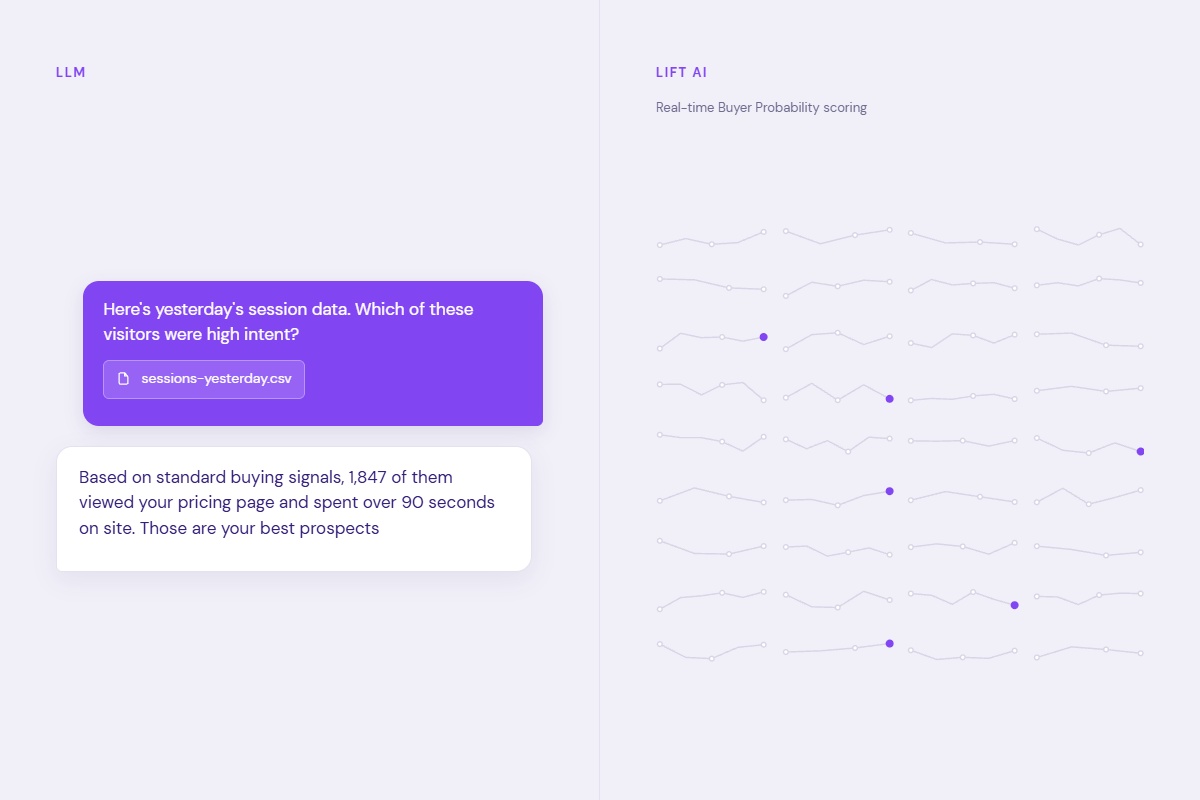
Because signals like “viewed pricing page” aren’t cutting it. Especially when up to 94% of pricing page visitors have a low buying probability.
It's time to fix that. And the solution is hiding right under our noses, on our websites, in the form of buyer probability.
Outbound Has Its Place. This Is About What Comes First
To be clear: this is not an argument against outbound, or against signals, or against the emerging infrastructure of signal-driven marketing.
For smaller companies or those expanding into new markets, signal-led outbound is often the only viable path to pipeline. If you don't have meaningful inbound traffic yet, you have to go out and find buyers. There's no argument there.
But if you're a larger company with healthy traffic volume, there's a blind spot sitting right under your nose that makes more sense to convert first. If you can crack that nut, then outbound is simply a matter of scaling up the traffic coming in to convert.
Two Reasons You're Missing Buyers on Your Own Website
There are two primary reasons why GTM practitioners are missing buyers on their websites right now.
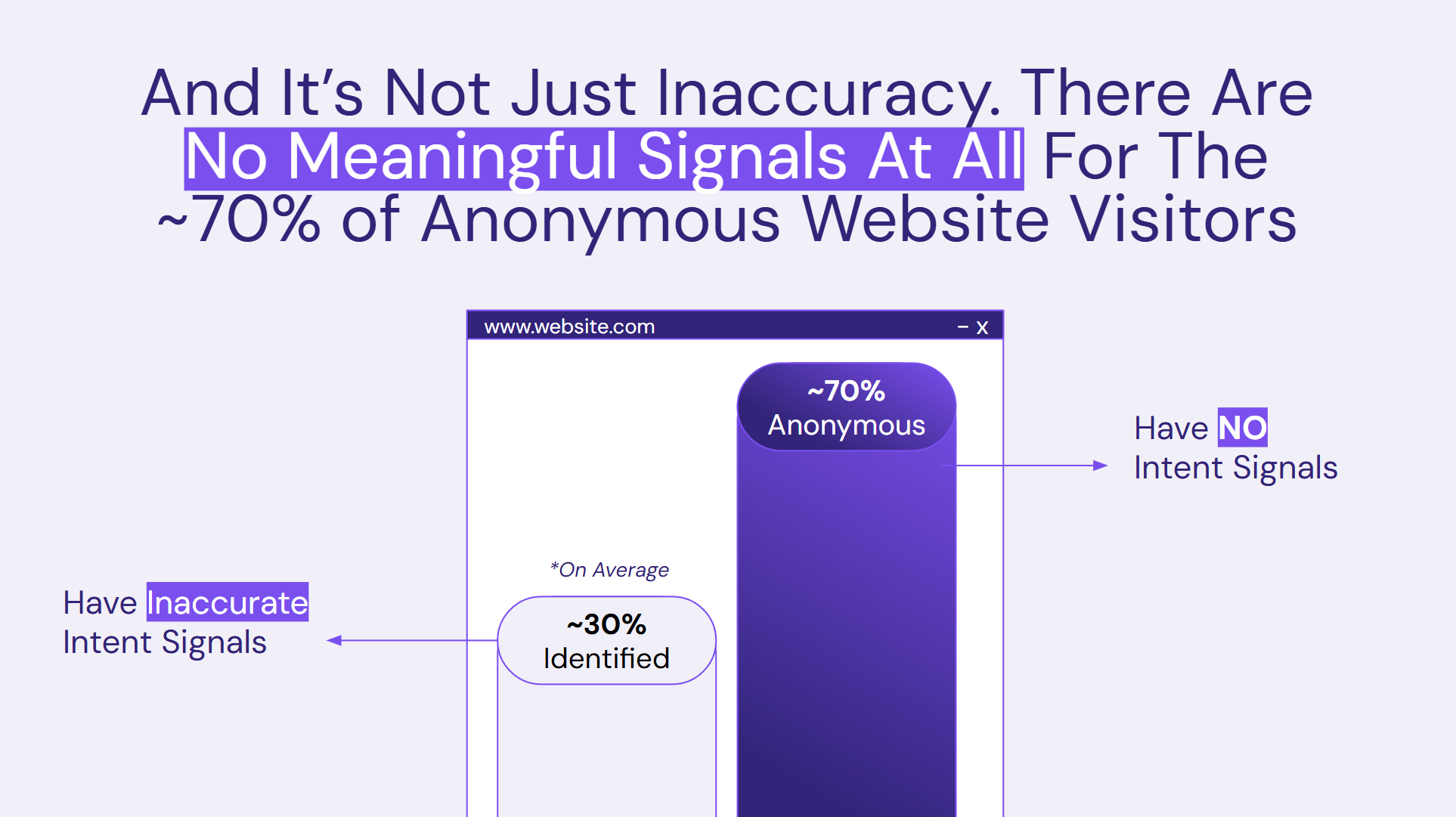
- Website buyer intent signals are ~20% accurate on average
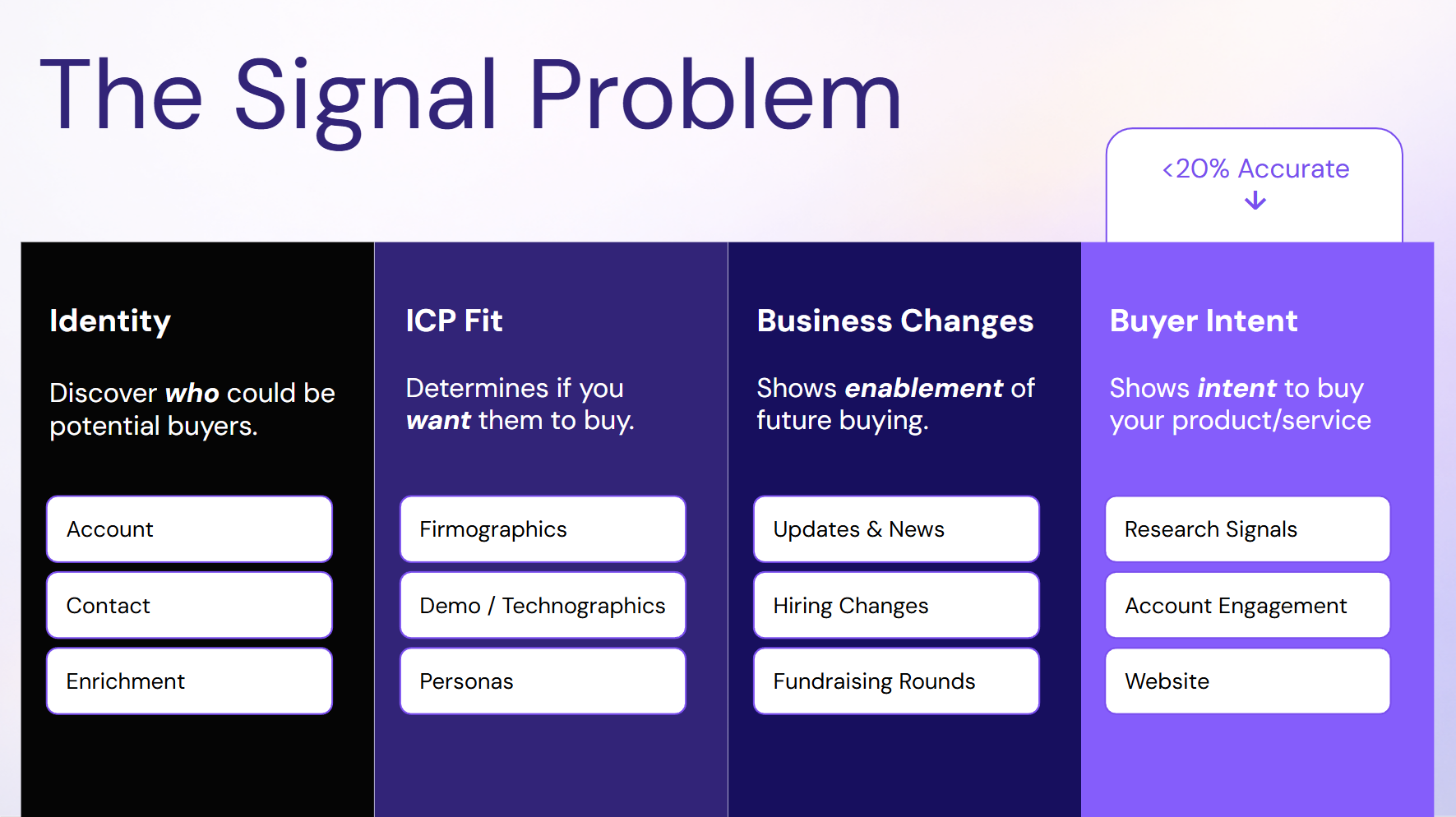
- There are no buyer intent signals are for the ~70% of visitors who are anonymous
Here’s what it looks like in practice:
- Build an ICP and target account list
- Run advertising and outbound to drive those accounts to your site
- Use an account or contact reveal tool to find out who visited
- Add basic website signals on top like “viewed pricing page” or “filled form”
- Prioritize them in your CRM and SEP
This makes sense on paper. Especially when most of it can be run autonomously with AI Agents.
But here's the problem buried inside it:
- Only ~30% of your visitors can be identified with ID tools, leaving 70% anonymous, overlooked and ignored
- Even when you do identify someone as an Account or even a Contact, you still don't know if they're ready to buy, which leads to wasted time and costs
- Relying on pricing page visits to determine their buying intent is up to 94% inaccurate while also missing the 88% of buyers who are active on other pages
- Similarly, relying on form fills only captures a tiny percentage of visitors, and up to 60% of form fills may be low buying probability as well
This results in what we call a “GTM Death Spiral” - chasing low quality leads based on who visitors are instead of what they're actually doing, which compounds costs and automates noise at every step of the GTM stack.
You're playing the right game — just in the wrong order.
Your Website Already Has the Answer. You Just Can't See It Yet
Here's what makes your website fundamentally different from every other signal source in your GTM stack.
Third-party intent data — keyword searches, content consumed, technographic updates, firmographic changes — gives you fragments. Isolated data points from across the web, stitched together and sold to you and your competitors simultaneously. It's useful context, especially for personalization of outreach. But it's not the full story.
Your website is the only place where you have complete, unbroken visibility into a prospect's behavior. A digital footprint, rather than fragmented pieces from different sources and from different times. Every scroll, every hover, every click pattern, every second of dwell time, every path through your content. It's all first-party data that you own and nobody else does.
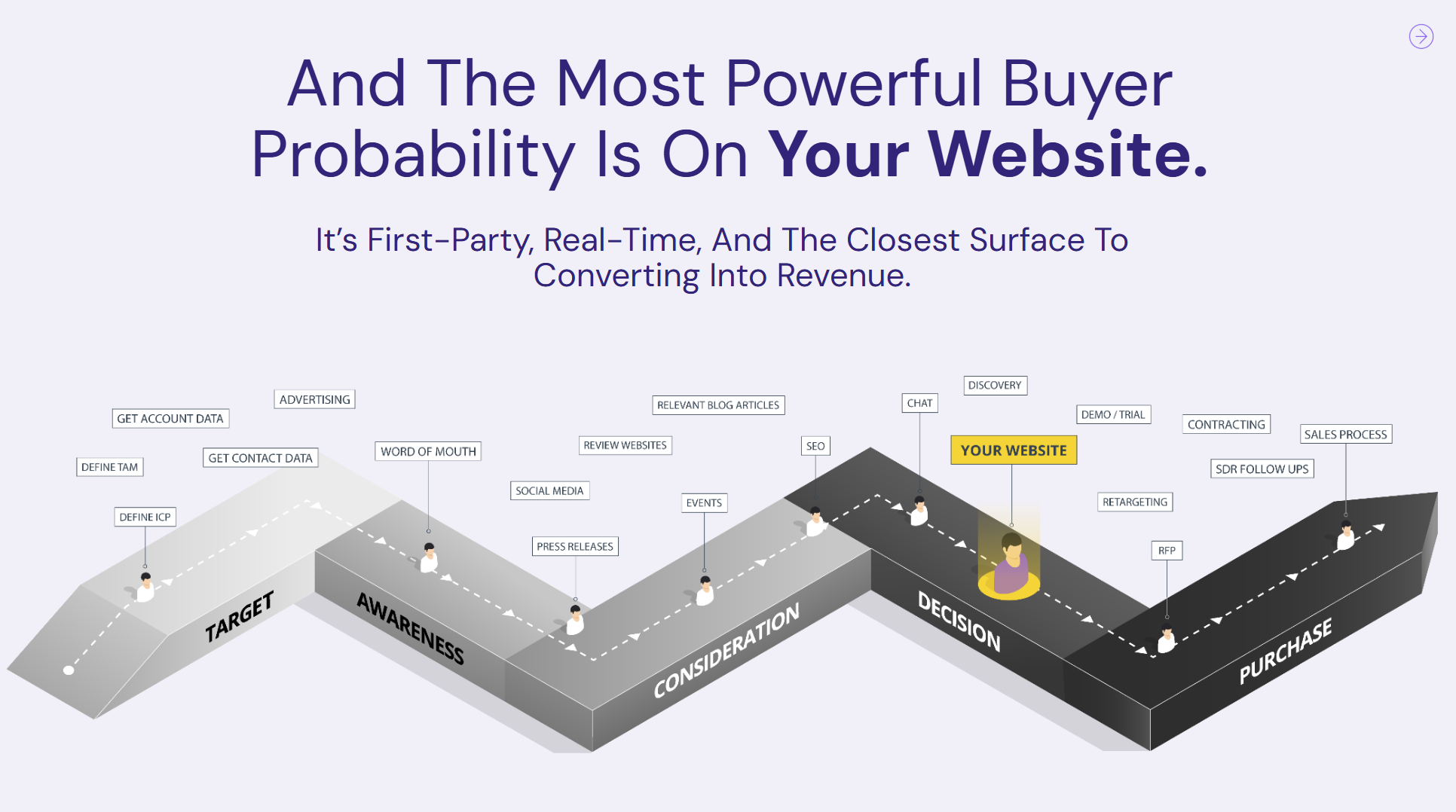
The problem, until now, was that no one could reliably translate that behavioral footprint into a confident, real-time answer to the question that matters: is this person going to buy?
That's exactly what Lift AI's Website Buyer Probability™ scores do.
The Probability Layer Your GTM Stack Has Been Missing: Lift AI
Lift AI analyzes hundreds of behavioral signals per visitor, every millisecond, using a machine-learning model trained on billions of web journeys and hundreds of millions of closed sales.
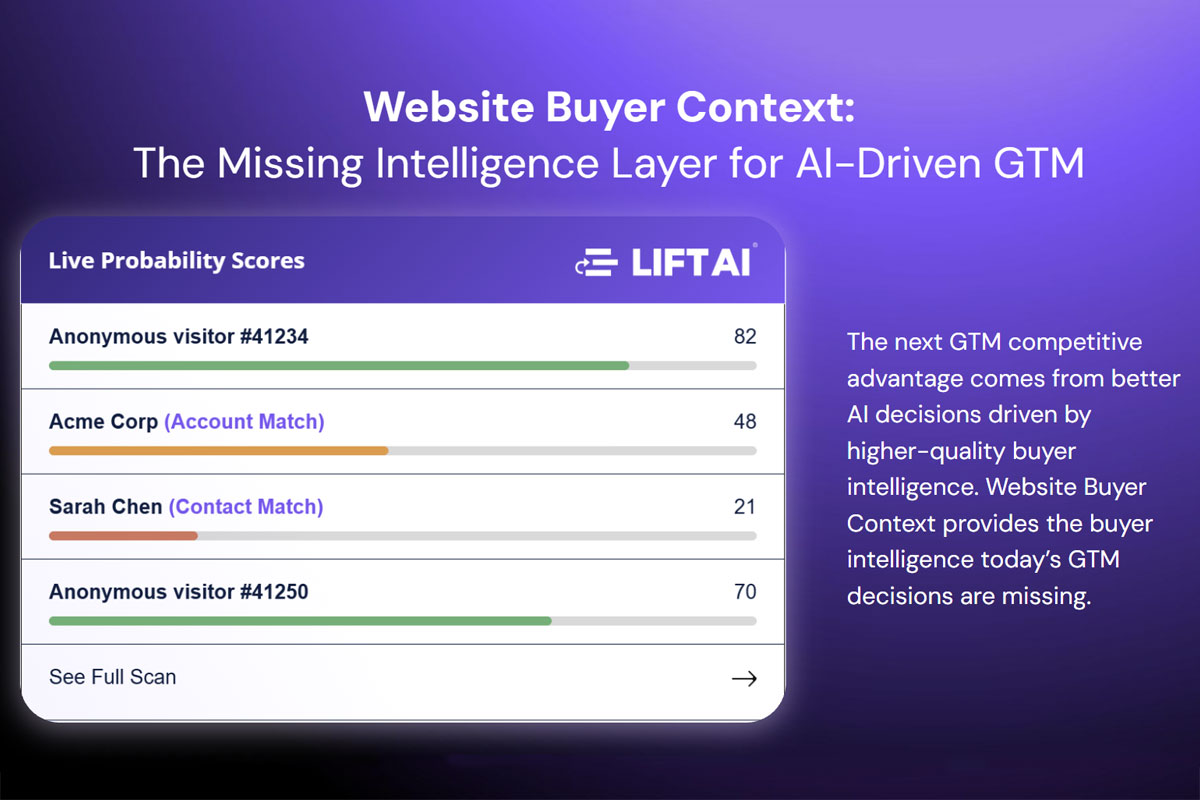
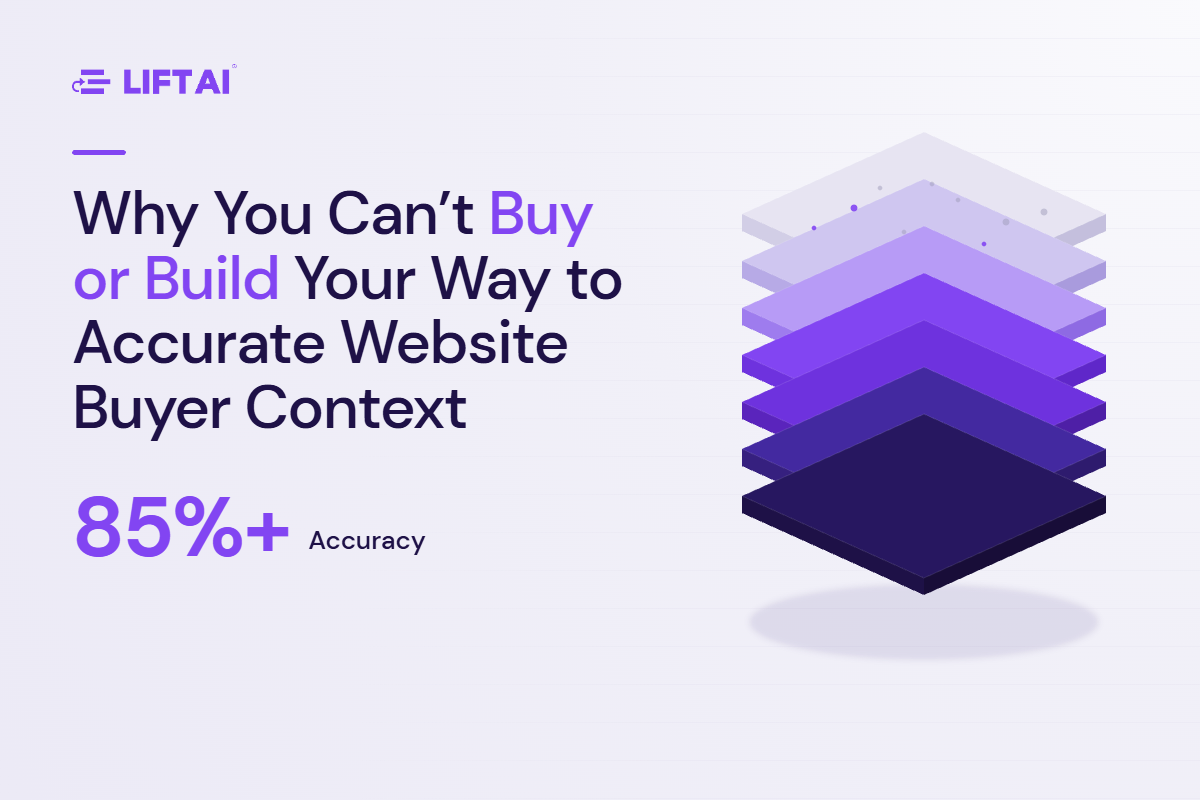
The result is an 85%+ accurate Website Buyer Probability™ score for every visitor on every page of your site, whether they're anonymous, a known account, or an identified contact.
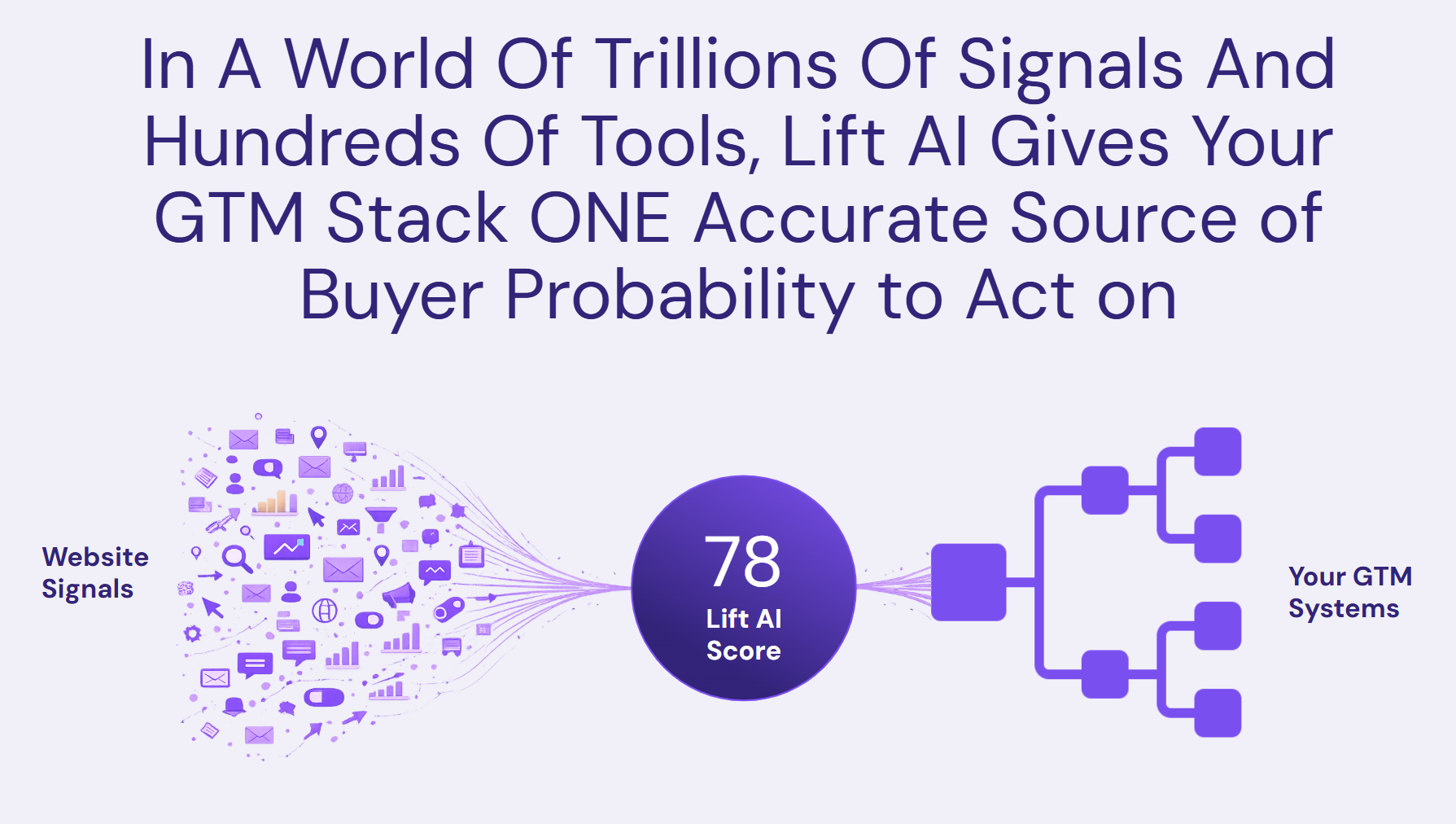
There’s no visitor identity required (but it can be added). No stack overhaul - just a layer of intelligence. One snippet of code and you're live.
We wrote an in-depth look at how Lift AI’s approach to probability compares to traditional signals - it’s well worth a 5 minute read.
These scores enable Lift AI to unlock all of the anonymous traffic that you’re currently missing, and adds the critical accuracy your GTM stack is missing for Accounts and Contacts.
By feeding Lift AI scores into your stack, every rep, agent, workflow, and ad performs better - leading to more pipeline, more revenue, better ROAS, and lower CAC.
Unlocking The “Buyer Out” vs “Account In” Strategy
None of this means you should stop outbound prospecting, running ABM, or investing in demand generation. Those motions have genuine value, and the signal economy is still a legitimate part of a mature GTM strategy.
But the sequence matters enormously.
The most rational approach is to capture the buyers already in your store first — then go find more. You've already invested time, money, and resources to bring them there. Letting them leave without knowing they were ready to buy is the most expensive thing you're not measuring.
The two approaches aren't in competition. They're complementary. Lift AI calls this the "Buyer Out" approach, in contrast to the traditional "Account In" method:
- Lift AI scores every visitor in real time — surface the high-probability ones immediately, regardless of identity
- Layer your account ID and enrichment tools on top — add firmographic context to the visitors you can identify, then enrich them if they are high- or mid-probability
- Layer your other intent signals on top of that — keyword searches, content consumption, technographic signals and all of the rest narrow your focus further, allowing for better prioritisation and personalization
- Engage with precision — route to sales and agents, trigger chat, adjust website content, optimize ad spend, and much more.
The result is a GTM system where every component works harder. Higher-quality pipeline. Better ROAS. Lower CAC. Sales teams spending their time on prospects actually close to revenue.
The same budget, pointed at the right people.
See Real Results in 30 Days (or Less)
Here's what happens when companies start scoring buyer behavior instead of just identifying accounts:
Truckstop used Lift AI to route high-probability visitors directly to their sales team and chat platform. They booked $17k in incremental ARR in the first 30 days, delivering a 3.8x ROI. By month five, that had grown to $286k in incremental ARR — a 27x return.
Payscale discovered that anonymous visitors scored as high-probability by Lift AI represented just 1.73% of their total traffic, but produced 27.6% of their pipeline — a true needle in the haystack. Overall, 54% of their pipeline came from anonymous visitors that no other tool in their stack could see.
Chronus found that 85% of their pipeline was coming from anonymous visitors their ABM tools had completely missed. More striking: the 0.05% of visitors who were anonymous but high-probability according to Lift AI produced as much pipeline as the 27% of visitors who were fully known and ID-revealed. Yet when they combined Lift AI with 6sense, their conversion to pipeline improved 11.6x, demonstrating the power of adding individual Lift AI buyer probability scores to broader account intelligence.
Fluke Biomedical stopped targeting visitors based on page visits and went all-in on playbooks powered by Lift AI scores. Revenue per chat conversation increased 246%. Revenue per site visitor increased 345%.
The pattern across all of these results is the same: there were high-intent buyers already on the website. They just weren't visible until behavioral scoring made them visible.
Find The Buyers Hiding In Your Website Traffic — Free for 30 Days
The companies that win on pipeline efficiency in 2026 and beyond won't just be the ones who find the most net-new buyers. They'll be the ones who stop leaving revenue on the table from the buyers they already have.
Lift AI gives you X-ray vision for the sales-ready visitors hiding in plain sight across every page of your website, right now.
And to prove it, Lift AI offers a free 30-day Website Buyer ProbabilityTM assessment for qualified accounts. Install a single snippet of code on your website and you'll immediately begin receiving real-time buyer probability scores across all of your traffic.
You'll see, for the first time, exactly how many sales-ready buyers have been visiting your website — and leaving — without you ever knowing they were there.