Updated December, 2025. As AI and predictive modeling marketing in particular continue to develop, we’ve refreshed the article to reflect the latest advantages of integrating them into your sales workflow.
AI and automation now power every modern marketing and sales motion. That shift raises the stakes for data quality. But when the signals feeding your GTM engine are inaccurate, every automated workflow - from scoring to routing to chat - amplifies the mistakes.
We refreshed this article to reflect the growing importance of accurate, real-time behavioral insights in your marketing workflow.
Customer data has always been essential to high-leverage decision-making. The more we know, the better decisions we can make. But while the data of the past was easy to keep in one’s head, today we generate and track millions of data points that require powerful analytical tools to process.
In the digitization era, companies are used to engaging with and buying products online. Even significant enterprise software contracts might start with a quick message in an online chat.
That’s why online marketing campaigns and advertising are becoming more sophisticated and consequential to business growth.
Data is king — but only when it’s accurate.
Teams that operate with more accurate behavioral data gain a decisive edge. They target with precision, reduce waste, and activate the right buyers instead of guessing. This creates a cycle of better decisions and improved performance across the GTM engine.
Predictive modeling has traditionally been the way marketers attempt to forecast behavior. But marketing teams now face a new truth: identity doesn’t equal intent, and pricing pageviews don’t equal intent. Predicting who is truly ready to buy requires behavioral accuracy at scale.
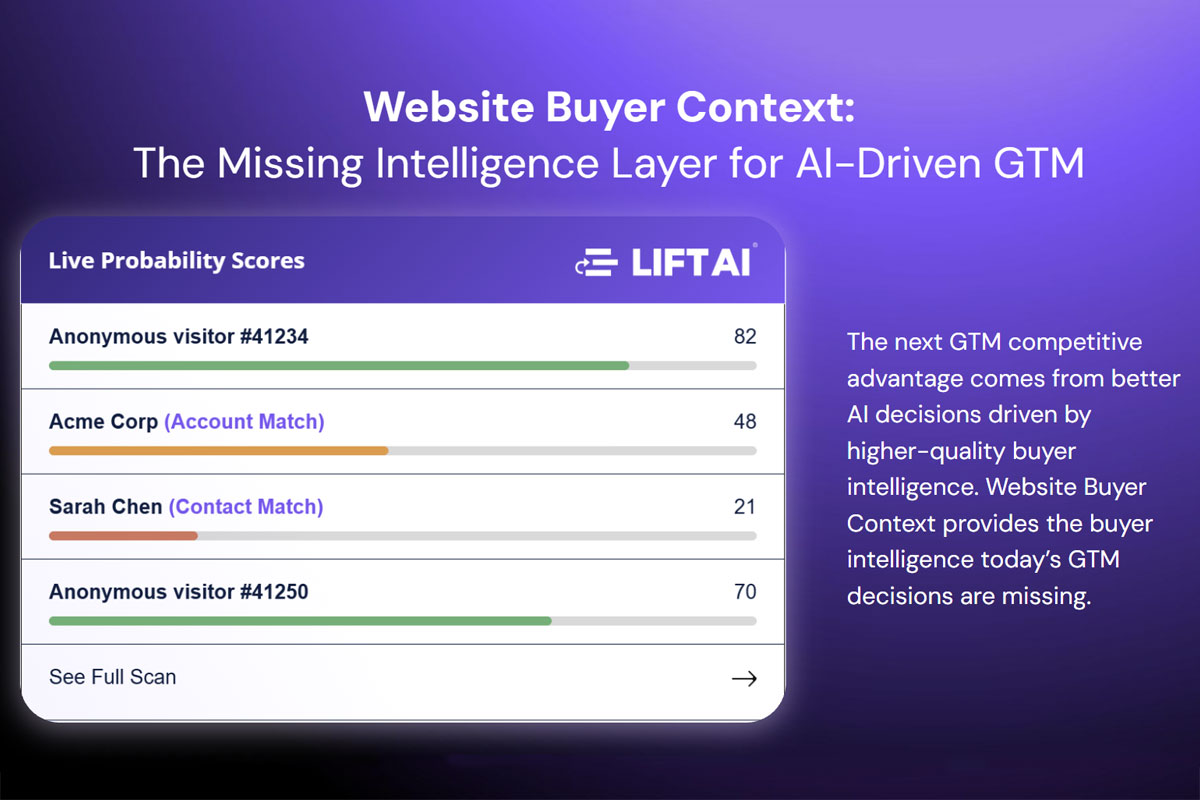
Tip: If you want predictive capabilities that score every visitor — Engaged Visitors, Identified Contacts & Accounts, and Anonymous Visitors — Lift AI provides a real-time buyer intent score with 85%+ proven accuracy, powered by 15 years of behavioral training and billions of web journeys. It plugs directly into your GTM stack and reveals which visitors are actually ready to buy.
What Is Predictive Modeling and How Can It Benefit Marketing Teams?
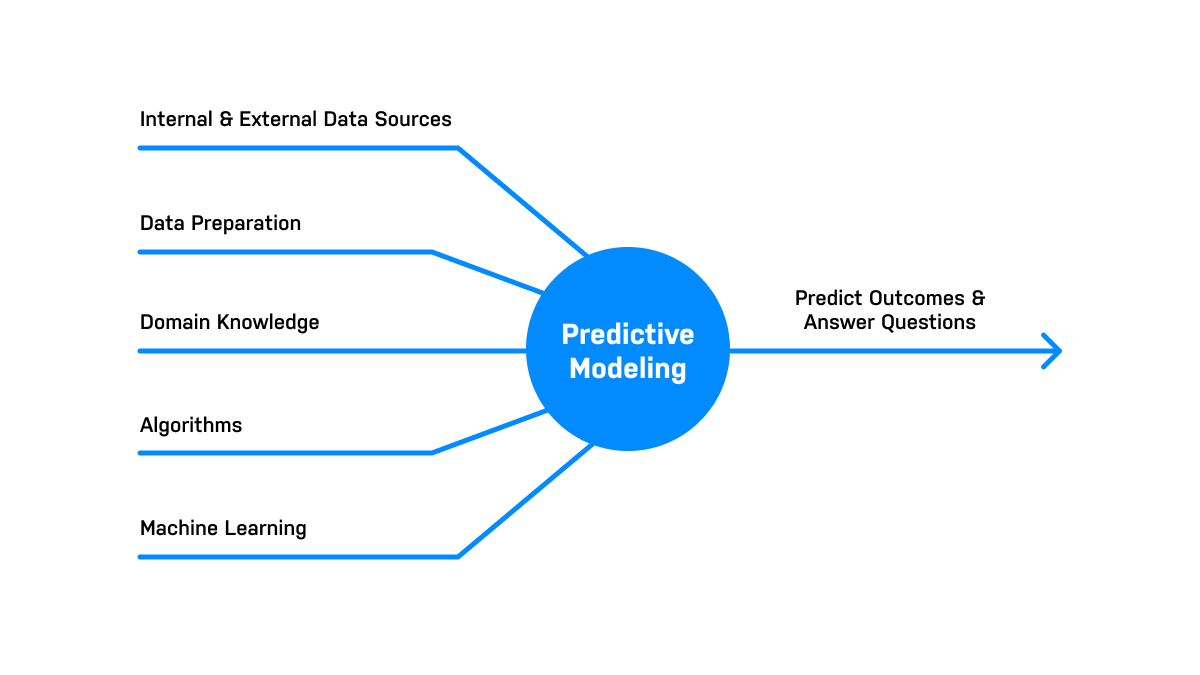
Predictive modeling in marketing allows companies to find the most effective marketing strategy and make better decisions by leveraging data with the help of AI or machine learning.
(Source)
Predictive analytics is a statistical technique that analyzes historical data to predict future outcomes, building a mathematical model to identify relationships and trends in the data and predict outcomes based on these insights.
There are two types of predictive modeling in marketing:
- Autonomous (e.g., showing tailored product recommendations based on past behavior)
- Informative (e.g., suggesting a better headline for a newsletter)
Both types evaluate millions of data points - time, location, demographics, and past actions - to generate forecasted outcomes.
A few years ago, these AI capabilities were exclusive to major tech organizations. Today, predictive analytics and modeling can be used by any company that sees the benefit of leveraging the latest technology to reach its goals.
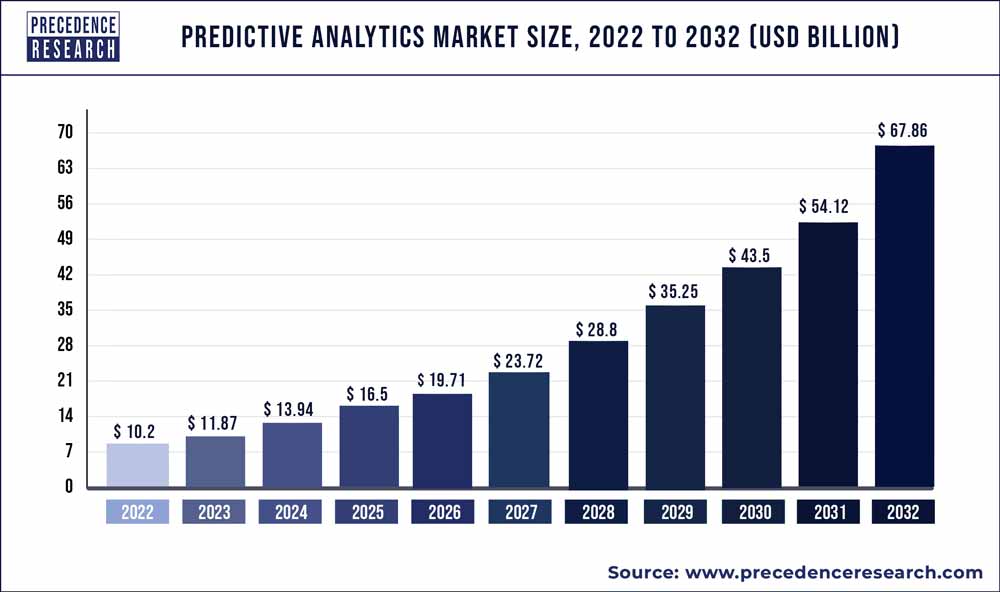
And we've still only begun to scratch the surface of potential uses for predictive analytics and modeling. A recent Precedence Research report projects that the predictive analytics market will reach $67.86 billion by 2032.
Types of Predictive Models Used in Marketing
There are several common types of predictive models marketers use to forecast customer behavior and optimize campaigns:
Clustering models
This predictive model is used to segment customers into groups based on shared characteristics or behaviors. You can customize your marketing messages and campaigns by strategically identifying customer segments to maximize their impact and drive results.
HubSpot identifies seven different types of segmentation models that companies can use to easily personalize customer experiences.
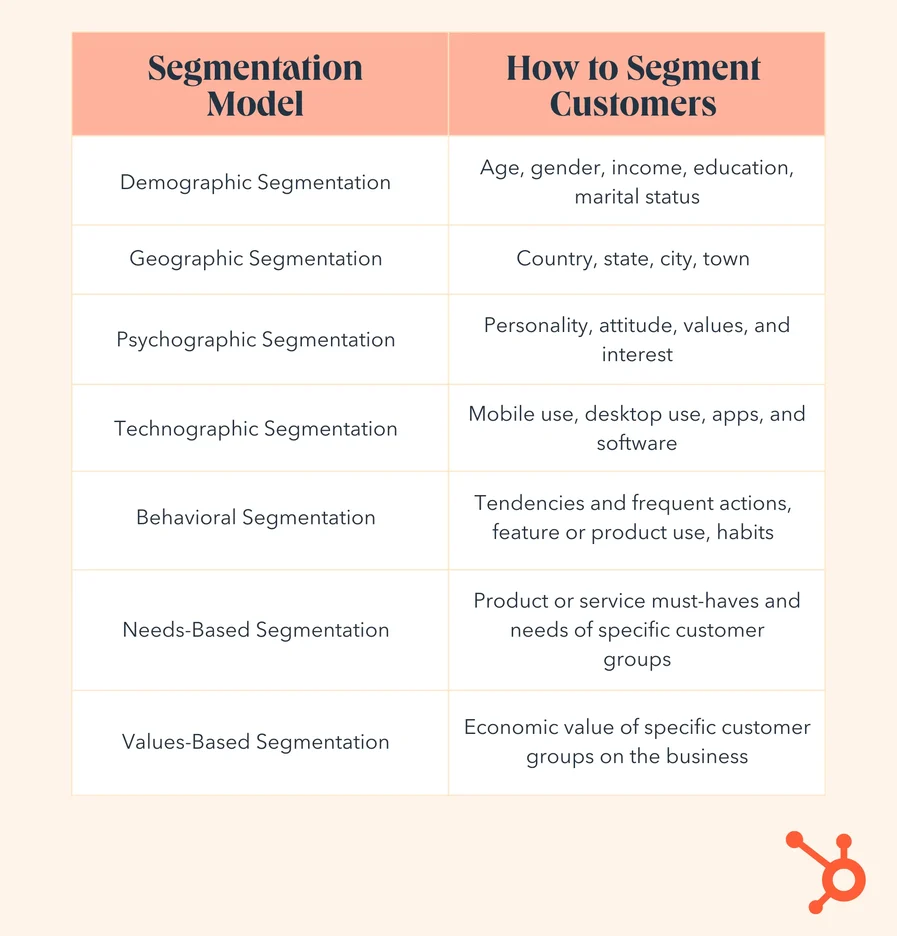
For example, a clothing retailer could use a clustering model to pinpoint customers who prefer high-end jeans and target them with email campaigns promoting their new designer line.
Propensity models
Also called predictive scoring, propensity models forecast the probability of a customer engaging in a specific action, like purchasing a product, canceling a service (churning), or responding to a marketing campaign. These models analyze past customer behavior and pinpoint patterns marketers can use to predict future behavior.
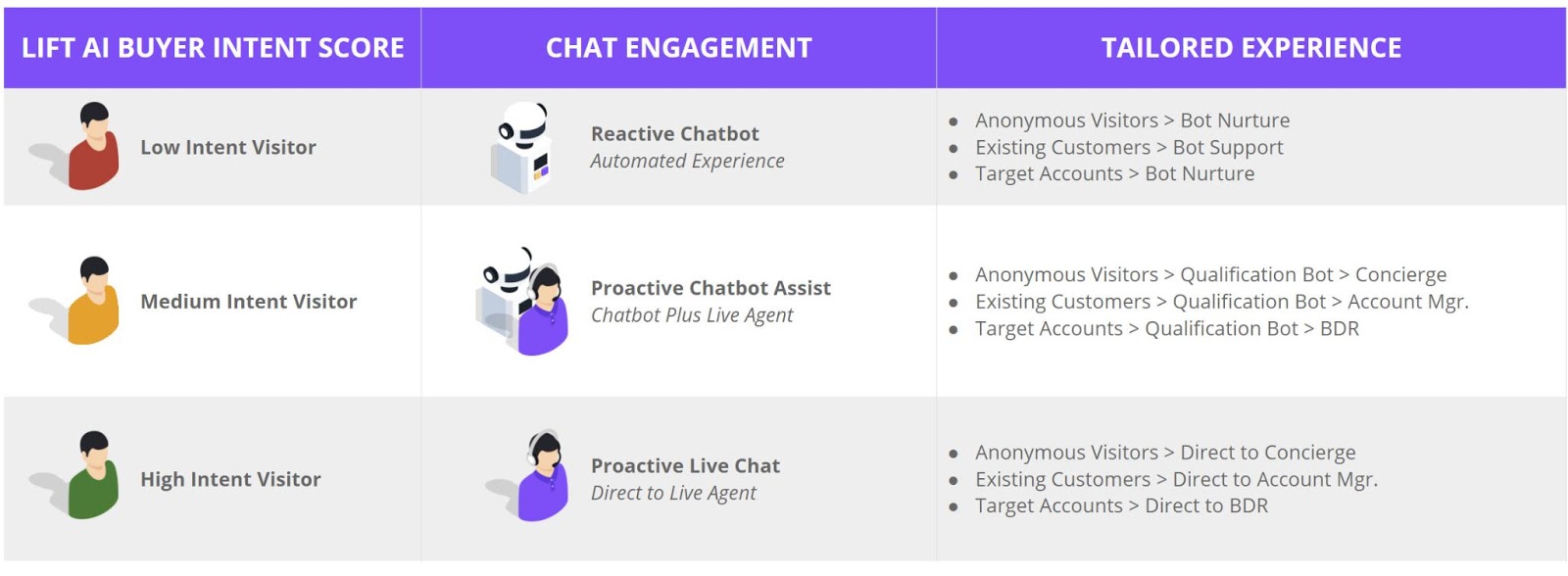
Lift AI applies an advanced form of real-time behavioral propensity scoring, evaluating hundreds of micro-behaviors to assign an accurate buyer intent score to every visitor — even those who never fill out a form. This helps teams align engagement strategies by High, Mid, and Low Intent in real time.
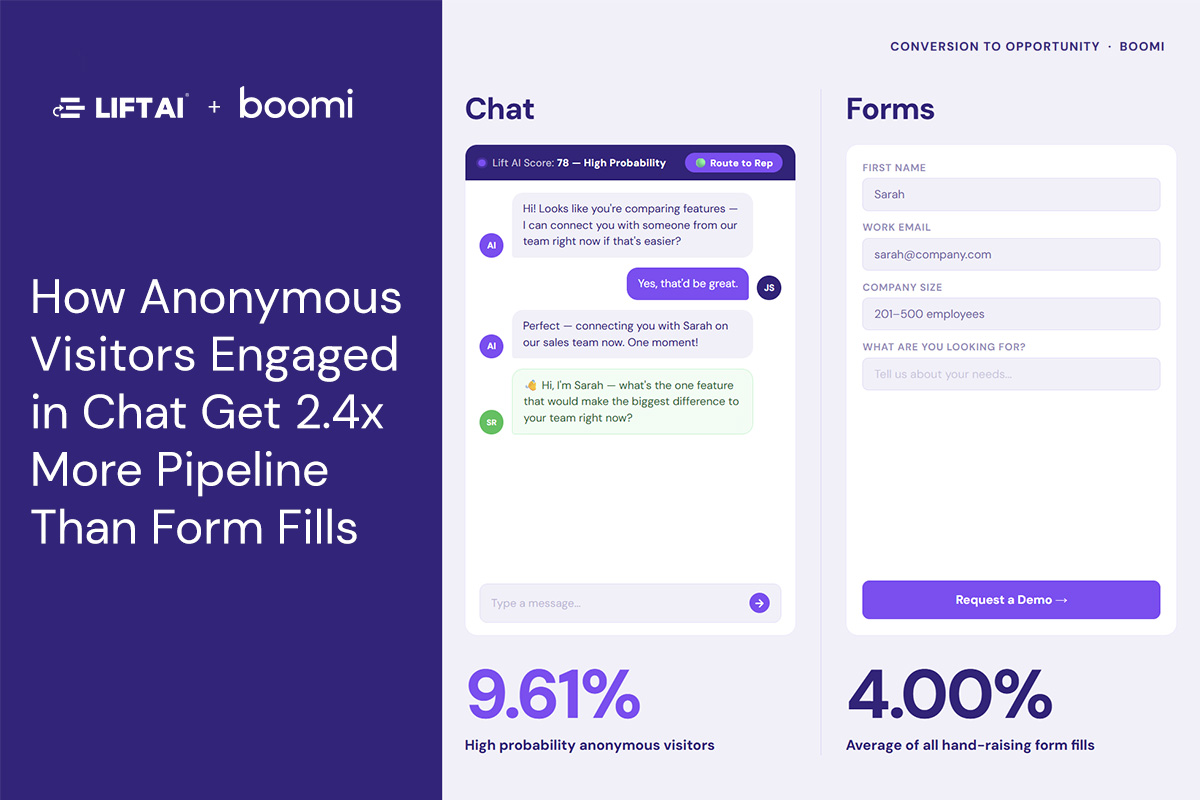
Here, we see how a company may use chat technology to provide a targeted customer experience while also increasing the efficiency of its sales team's efforts.
Propensity models can also be used to improve customer retention and reduce customer churn. This predictive model is especially valuable for subscription services that want to pinpoint customers who are at risk of canceling their subscriptions so they can provide them with a compelling discount or other incentive to ensure they remain loyal.
Collaborative filtering models
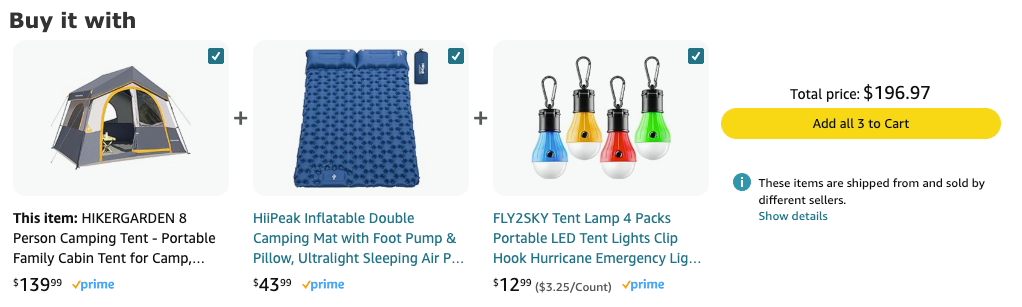
Collaborative filtering models are a powerful tool for recommending products and services based on customer behavior and similar customer preferences.
There are two types of collaborative filtering:
- User-based measures similarities between users. For instance, a streaming service could use collaborative filtering to offer personalized movie recommendations by analyzing a customer's previous movie choices and those of similar users with comparable tastes.
- Item-based measures similarities between items that users rate or buy, and other items. Amazon uses this extensively to upsell additional items that can accompany what a user is browsing to purchase.
In addition to Amazon, this predictive model powers the recommendation engines used by companies like Netflix, LinkedIn and Spotify.
Regression models
Regression models are statistical techniques that uncover the relationship between one or more independent variables (factors you can influence) and a dependent variable (the outcome you want to predict). This translates to understanding how different factors impact key metrics.
Marketing and sales teams can use regression models to:
- Optimize marketing campaigns
- Perform price sensitivity analysis
- Predict customer lifetime value (CLV)
- Optimize sales territories
- Forecast sales
- Measure marketing ROI
- Find opportunities to upsell and cross-sell
Time series models
This predictive model forecasts future events based on trends in historical data. It's especially helpful for predicting factors like seasonal sales fluctuations, inventory management, website traffic patterns, or product demand.
As this graphic from Intelliarts shows, time series modeling is an effective tool across many industries and use cases outside of sales and marketing.
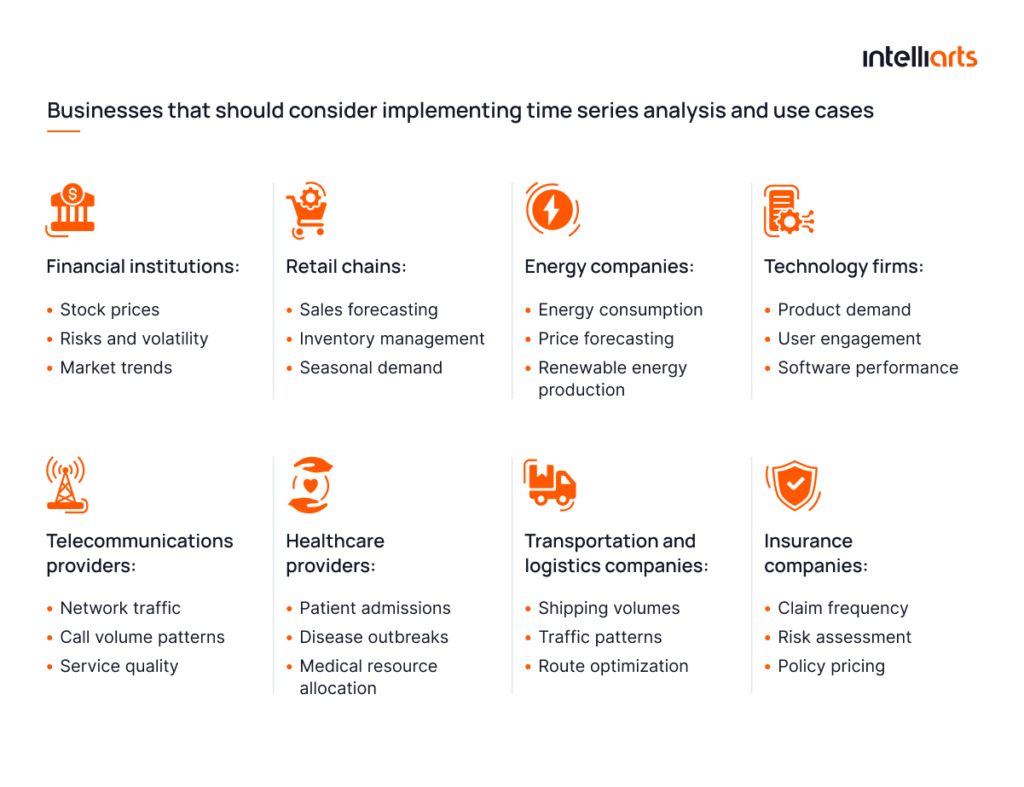
By understanding these cyclical trends, marketers can better plan resource allocation and optimize marketing campaigns and pricing strategies.
Why You Should Add Predictive Modeling to Your Marketing Strategy
Unprecedented Insights
Predictive models help you understand customer behavior based on historical patterns. This removes guesswork and improves the impact of campaigns, lead generation, and conversion opportunities.
Task Automation
Predictive tools can automate effort — including prioritizing High Intent website visitors so your teams focus attention where it matters.
Revenue Lift
Predictive modeling can surface upsell opportunities, improve retention, and guide acquisition strategy — all leading to stronger revenue performance.
Asset Optimization
Predictive tools analyze how visitors interact with your digital properties and help you optimize everything from website UX to ad performance.
A crucial modern marketing truth: Your website is likely already filled with sales-ready buyers - you just need Lift AI's accurate signal to find them.
Predictive Modeling Marketing Challenges
While predictive modeling offers significant benefits, marketers should be aware of potential challenges in their marketing strategies:
Data Quality
Predictive models are only as good as the data they are built on. Ensuring data is accurate, complete, and representative of the target audience is crucial for reliable predictions.
Interpretability
Some advanced modeling techniques, like neural networks, can be difficult to interpret. Marketers may struggle to explain why the model made certain predictions or how to act on the insights.
Changing Conditions
Major events like the COVID-19 pandemic can dramatically alter customer behavior, making pre-existing models less accurate. Models need to be regularly updated to account for changing conditions.
Resources and Expertise
Building and deploying predictive models often requires specialized skills in data science and machine learning. Marketers may need to invest in training or partner with experts to fully leverage predictive analytics.
Despite these challenges, the competitive advantages of predictive modeling are clear. By understanding customer behavior, optimizing campaigns, and acting on data-driven insights, marketers can drive more conversions and revenue with predictive modeling.
How to Apply Predictive Modeling in Your Marketing Strategy
One of the most impactful uses of predictive modeling is identifying true buyer intent.
Unlike BDRs making manual judgment calls, today’s best predictive systems use real-time behavioral analysis to determine which visitors are sales-ready.
This is where Lift AI enters the picture.
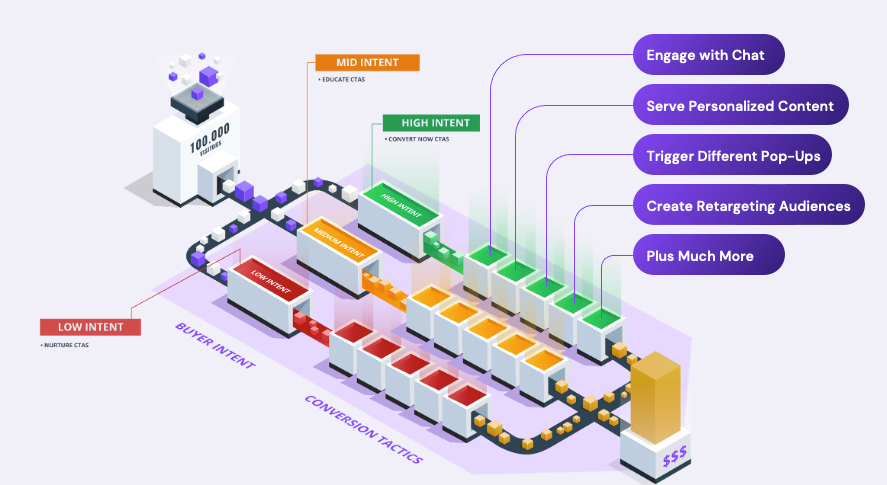
Where Lift AI Fits Into This Article’s Predictive Framework
Lift AI uses real-time Micro-behavioral Analysis™ (trained on billions of visitor journeys) to score 100% of your website visitors — Engaged Visitors, Identified Contacts & Accounts, and Anonymous Visitors — with 85%+ proven accuracy.
This enables marketers to:
- Route High Intent visitors directly to sales
- Nurture Mid Intent visitors with automation
- Deflect Low Intent visitors to educational paths
And because Lift AI plugs directly into tools like HubSpot, chat platforms, and ads, your GTM stack can act on accurate signals the moment a visitor arrives.
Proof of Lift AI's Impact
RealVNC used Lift AI’s 85%+ accurate intent signal to uncover hidden revenue across all visitor types. They found:
- High-intent form fills generated 17.25× more revenue per lead than low-intent form fills
- 1,476 high- and mid-intent visitors matched in HubSpot (who never filled out a form) drove 2.3x more revenue than all low-intent form fills
- 94% increase in pop-up CTR and 71% boost in HubSpot chat conversions
These results illustrate how accurate real-time behavioral intent can transform predictive modeling into real revenue outcomes.
Drive Increased Pipeline and Sales Efficiency With Lift AI
Companies using Lift AI have reported that within 90 days their chat conversions increased anywhere from two to 10 times.
PointClickCare increased conversions by 400%, adding over $1M of incremental revenue in the first year. Formstack, another Lift AI customer, increased pipeline sales by 420%.
Predictive marketing works because it leverages new technologies to improve well-established sales patterns.
Integrate predictive marketing into your workflow today by getting in touch with us.
Signing up is as easy as adding a JavaScript snippet to your website. After that, Lift AI can be automatically integrated with your marketing stack, from chat platforms to CRMs. There’s nothing better than seeing the results of predictive tools for yourself